Choosing Your First Terrestrial Tarantula
Which tarantula to choose so you don't get discouraged at the start
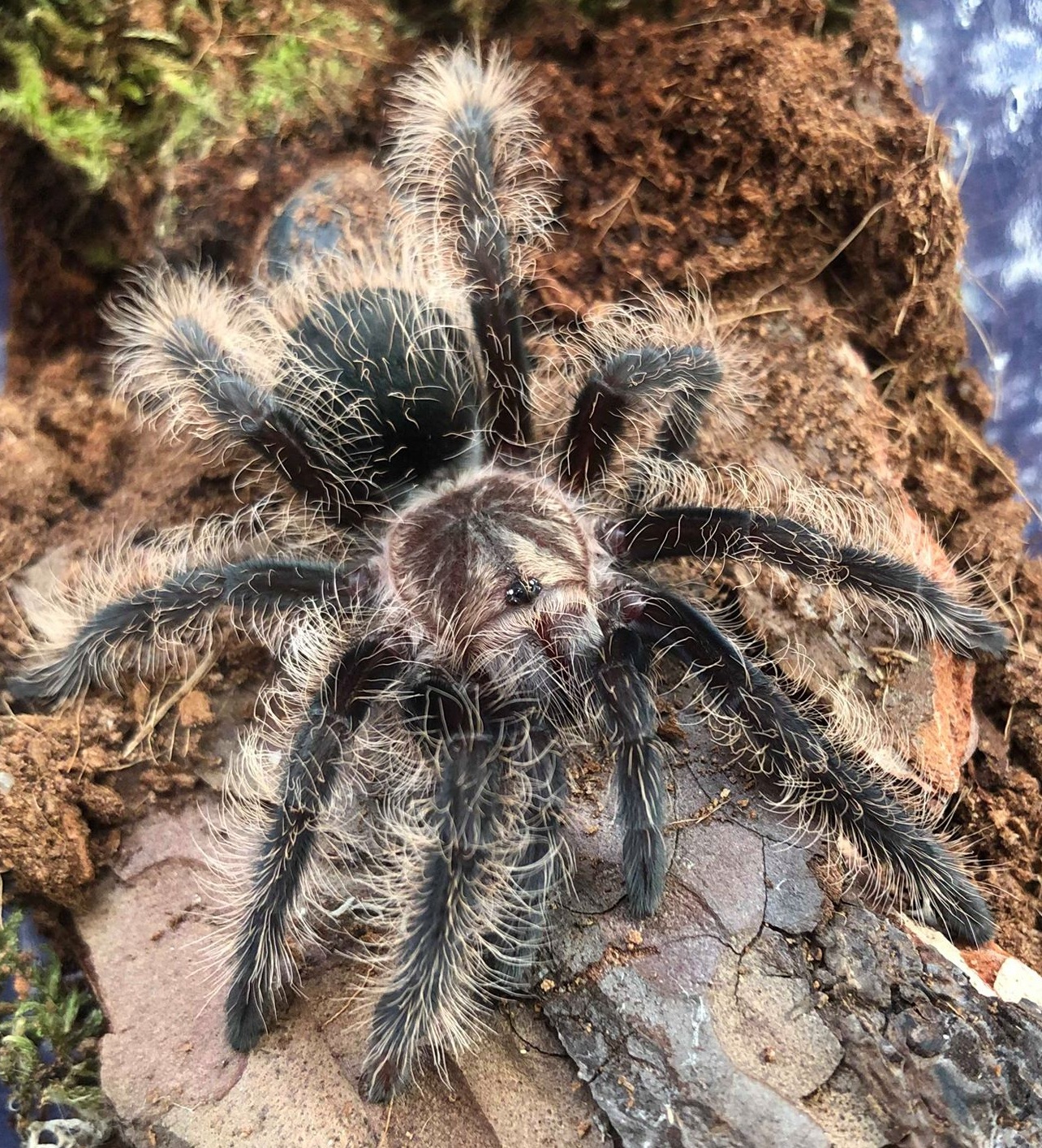
Tliltocatl albopilosus "Nicaragua"
Terrestrial tarantulas are often recommended for beginners due to their simpler care requirements and more predictable behavior. However, even in this group, it's important to pay attention to a few key aspects.
1. Why a terrestrial tarantula?
Terrestrial tarantulas spend most of their time on the substrate or in burrows. They tend to be slower and less prone to sudden jumps compared to arboreal species, making daily observation and care easier.
This does not mean they are always calm or fully predictable—each individual may behave differently.
2. Species – which one to start with?
Begin with species commonly recommended for beginners, which have stable care requirements and are readily available in the hobby.
Examples of terrestrial species:
- Brachypelma spp.
- Grammostola spp.
- Lasiodora spp.
- Aphonopelma spp.
- Tliltocatl spp.
- Neoholothele spp.
- Acathoscurria spp.
The species listed above are examples—always check the care requirements of the specific tarantula before purchasing.
3. Temperament – what does it mean?
Temperament refers to a tarantula's reaction to stimuli: fleeing, defensive posture, using urticating hairs, or attempting to bite.
Choosing a species known for being calmer increases the chance of smoother behavior, but there are no 100% guarantees.
Factors affecting temperament include:
- individual personality
- age
- housing conditions
- stress and handling
4. Venom and urticating hairs
All tarantulas have venom, but its effect varies depending on species and individual reactions.
Many terrestrial species also have urticating hairs, which they may flick when stressed. Contact can irritate skin, eyes, or respiratory tract.
5. Age and size – juvenile or adult?
Beginners often wonder whether to pick a very young spiderling or a larger, older tarantula.
Key differences:
- Very young individuals – small and delicate, more sensitive to temperature/humidity changes, harder to feed and observe.
- Sub-adults – generally hardier and easier to monitor.
- Adults – easier to observe appetite and behavior but require some experience and confidence in care.
6. Male or female?
The sex of your tarantula matters, especially for beginners.
- Males – after maturing, they live only a short time (a few months to 1–2 years), limiting long-term care.
- Females – can live many years and continue molting, providing long-term satisfaction.
7. Before buying – education is key
Choosing your first tarantula is not just about species, but also knowledge. Before making a purchase:
- Check the care requirements of the specific species
- Learn which behaviors are normal
- Prepare the enclosure in advance
Choosing the right first tarantula makes learning and caring for future tarantulas much easier.